
Check Your VW’s VIN and Get Detailed Specs & Past Records
Buying a used VW without checking the VIN is dangerous, as you could accidentally buy a stolen vehicle. That is why you need to use the VW VIN Check and get the vehicle history report, examine the specs and records like auction, accident, title check, and more!
What is a VW VIN Check?
A VW VIN check tool that you can use to check the car’s background at home. This tool helps you get a detailed vehicle history report, ensuring the car doesn’t have any hidden issues. The report includes important information such as the car’s specifications, market value, original price (MSRP), auction records, accident history, warranty status, title check, maintenance records, and more.
VW VIN Number Structure
A VW VIN consists of 17 characters, and each section has the information of the vehicle, like serial number, manufacturer plant location, and engine code. The VIN is usually divided into three main sections, namely:
WMI (World Manufacturer Identifier)
The first three characters show that the vehicle was made by Volkswagen and point to the country or region where it was produced. For example, if the VIN started with “1”, it means that the car was manufactured in the USA.
VDS (Vehicle Descriptor Section)
Characters four to nine describe the vehicle itself. This part covers details like the model line, body type, engine option, and other design features.
VIS (Vehicle Identifier Section)
The final eight characters help identify the exact vehicle. They include the model year, the factory where it was assembled, and the unique serial number assigned to that car.
Where to Find the VW VIN
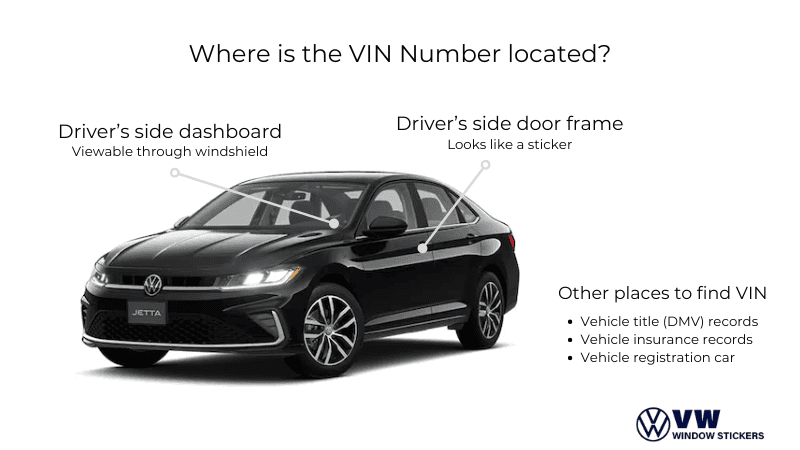
The VW’s VIN can be found in several locations on the car as well as the paperwork.
Here’s where you can check the VW’s VIN.
- Dashboard Near the Windshield: Look through the windshield from outside the car. The VIN is usually stamped on a metal plate at the lower corner of the dashboard on the driver’s side.
- Driver’s Side Door Frame: Open the driver’s door and check the door jamb. The VIN is often printed on a sticker along with tire and weight information.
- Vehicle Documents: The VIN is also listed on official paperwork, such as the registration, insurance documents, or bill of sale.
Why Check the VIN Before Buying a Used VW?
A VIN check helps you get detailed information about the car, and our VW VIN Check service can be used for both sellers and buyers.
For Sellers
Checking the VIN helps reduce the risk of fraud and theft. It allows you to see whether the VW has been reported stolen, cloned, or listed as a total loss, helping avoid legal or financial trouble later.
Reduce Fraud Risk
A VIN check helps spot cloned or suspicious vehicles before listing, lowering the chance of fraud during the selling process.
Avoid Stolen Vehicles
Confirm that the Volkswagen has not been reported stolen, protecting you from legal trouble and rejected ownership transfers.
Check Total Loss Records
See if the vehicle was marked as a total loss, which can affect resale value and buyer confidence.
For Buyers
A VIN check also helps confirm that the vehicle matches its description. It verifies details such as the model year, engine type, and trim level, making sure the Volkswagen being sold is what the seller claims.
Verify Vehicle Specifications
Check the model year, engine type, and basic specifications to ensure the Volkswagen details are accurate.
Confirm Trim Level
Make sure the trim level matches what is advertised, including factory features and equipment.
Match Seller’s Claims
Compare VIN data with the listing to confirm the vehicle is exactly what the seller claims to offer
How to Use a Free VW VIN Check
To use a free VIN check, you only need the vehicle’s VIN. Once you have it, follow these steps to get the basic vehicle information.
Step 1: Find the VIN
Start by locating the VIN of the VW you want to check. You can find it on vehicle papers like the registration or bill of sale for quick access.
Step 2: Enter the VIN
Enter the VIN into the form shown above. After that, click the button to start the check.
Step 3: View the Results
Wait a few seconds for the results to load. Once ready, you can see the car’s specifications, MSRP, colour options, and estimated market value. If more details are needed, you can upgrade to a premium report.
Information Included in a Free VW Decoder
A free VW VIN check focuses on the car’s basic details. It helps confirm important information before moving forward with a purchase or deeper review.
VW Model, Year, and Trim Details
Find the exact VW model, model year, and trim level. This helps confirm the vehicle matches the seller’s listing and avoids confusion between trims that may look similar but have different features.
Engine and Transmission Details
Check key mechanical information such as engine type, engine size, fuel system, and transmission. These details affect how the car drives, fuel use, service costs, and insurance rates.
Manufacturing Plant and Build Date
Each VW VIN includes details about where the vehicle was built and when it was produced. This can help spot build differences or known issues linked to certain years or factories.
Standard Features and Factory Options
Review the original factory features and optional packages. This section highlights the drivetrain type, safety features, interior setup, and other options that can affect the car’s value.
What Is Included in a Premium VW Vehicle Hisory Report?
A premium VW vehicle history report gives more than basic car details. It helps show past owners, accident records, service history, and possible long-term issues. Checking a full VW history report is an important step before buying a used car.
Accident History
Not all sellers clearly share accident details. A vehicle history report helps check if the VW was ever involved in a crash, even if it looks fine during inspection.
Accident Severity Details
Not every accident causes serious damage. The report reviews repair costs and damage records to show whether past accidents were minor, moderate, or severe.
Repair Quality Review
If the same area was repaired many times or repair costs were very high, it may point to problems that were not fixed properly.
Airbag Deployment Records
Airbag deployment often means a serious accident. If this appears in the report, check whether the airbags were replaced correctly. Cars with this history may still have safety concerns.
Ownership History
Checking ownership and title records helps confirm the VW is legal to drive and free from major title problems.
Number of Previous Owners
Vehicles with fewer owners are often better maintained. Many ownership changes in a short time may suggest ongoing issues or quick resales.
Lease vs Personal Use
The report shows whether the VW was leased or privately owned. Different use types can lead to different wear patterns over time.
Registration History by State
Check where the vehicle was located. This section is equipped with interactive maps that you can use to find out which state the registered.
Title Brand Checks
Title brands can affect value and insurance options. Here’s why you need to check the car’s title before buying.
Salvage
It is best to avoid a vehcile that was marked as salvage because it is too dangerous to be driven on the road again.
Rebuilt
A previously salvaged car that has undergone repairs and passed the safety inspection. Fit to be driven again, but stay cautious.
Lemon Law Buyback
This vehicle was repurchased by the manufacturer because of ongoing defects. It may be best to steer clear, as it suggests unresolved quality issues.
Maintenance and Service Records
This section shows how well the VW was maintained. It includes service visits, recall records, and other maintenance information.
VW Dealership Service Records
Service records from VW dealerships may appear in the report. Regular oil changes and routine service are good signs. Missing service history can be a concern.
Scheduled Maintenance History
VW vehicles last longer when serviced on time. Large gaps or missing major services may lead to higher repair costs later.
Warranty Status
Check the limit of date and mileage of each covering warranty. In this section, you will be informed about each date and the mileage limit of warranties, like roadside assistance, corrosion, and even the extended warranty.
Volkswagen Warranty Coverage Details
Check what type of warranty applies to the Volkswagen. This may include manufacturer warranty, corrosion coverage, or extended warranty plans still tied to the vehicle.
VW Recall Records
Recall information shows whether the vehicle had safety or emissions issues and if repairs were completed. Any open recall should be fixed before purchase.
VW Recall Information
Check the detailed causes of recalls, the date, and see how the manufacturer addresses the recall issues. In addition to that, this section also highlights the recall status, whether it is still open/closed.
Market Value and Pricing Information
Market value data helps check whether the asking price makes sense. It helps buyers avoid paying more than the car is worth.
Estimated Market Value
The value estimate is based on mileage, history, and current market trends. VW vehicles with clean records usually have higher values.
Retail, Trade-In, and Private Sale Prices
The report compares prices across different selling methods:
- Dealer retail prices
- Private sale values
- Dealer trade-in offers
Sales and Auction History
Sales and auction records show how often the VW changed hands and whether it was sold through auctions.
Sales Records
This section lists sale dates and ownership changes. Fast resales after repairs may be a warning sign.
Auction Records
Auction history may include dates, locations, prices, and vehicle photos. Reviewing this section can help assess the car’s past condition.
VW Report Designed for Everyone
A VIN check lets buyers review a Volkswagen’s history from home using a vehicle history report. It helps show how the car was owned, maintained, and used over time, making it easier to judge its actual condition.
| Feature | Carfax | Our Report | AutoCheck |
| Price | $44.99 | $19.99 | $29.99 |
| Single Report | Yes | Yes | Yes |
| Sales Listings with Photos | No | Yes | No |
| Auction Records with Photos | No | Yes | No |
| Market Value Data | Yes | Yes | Yes |
| Vehicle Specifications | Limited | Complete | Limited |
| Window Sticker Access | No | Yes | No |
| Classic VIN Decoding | No | Yes | No |
| Maintenance Guidance | Yes | Yes | No |
| Ownership History | Yes | Yes | Yes |
| Accident History | Yes | Yes | Yes |
| Damage Check | Yes | Yes | Yes |
| Branded Title Check | Yes | Yes | Yes |
| Salvage Title Check | Yes | Yes | Yes |
| Ownership History Map | No | Yes | No |
| Recall Information | Yes | Yes | Yes |
| Support for Heavy-Duty Trucks, ATVs, Trailers, Motorcycles | No | Yes | No |
| Mobile/Desktop App | No | Yes | No |
← Scroll horizontally to see more →
How a Buyer Saved $1000 With a VW Report
Hailey wanted to purchase a used 2017 VOLKSWAGEN JETTA for his husband’s birthday. She decided to purchase a vehicle history report to see the vehicle’s overall condition. Here’s what she saw on the report:
Sample: 3VWDB7AJ1HM331137
First Impression
- Cheaper than the other seller- Clean from any dents- No sign of repainting- Clean title- Low mileage
Findings
- 1 accident record- 1 Record(s) of damage- 3 specific events reported- 1 auction & 1 sales record(s)- 2 lien or loan record(s)- The vehicle title has a salvage brand record- The vehicle title has a rebuilt or rebuildable record
Outcome
Hailey cancelled her buying process before she paid for the down payment because the car had a “salvaged” history.
Lessons Learnt
Make sure to decode the VIN and get the report to ensure the car is in good condition.
Why Decode a VW VIN With the VW VIN Check?
This VW VIN decoder helps check whether the vehicle was ever sold at an auction or involved in an accident.
- No account or registration needed
- Real photos from past auction listings
- Only $19.99/report
- No expiration dates and downloadable
Check the Other VWs Information
FAQs on Checking the VW's VIN
Your 17-character Volkswagen VIN is located on the driver’s side windshield base, the door jamb sticker, or within the engine compartment. It is also listed on your registration and insurance papers.
Yes, plenty of free VIN decoder services are all over the internet. It offers easy access to the vehicle’s specifications, MSRP, colour selections, and the car’s market value. Click on the form above and write down the VIN to decode for free.
You can access detailed specifications using a free VIN decoder. Simply enter your 17-digit code into a trusted VIN check platform, like the VW VIN Check, to view your vehicle’s engine specs, trim package, assembly origin, and the vehicle’s records.
With a VW VIN decoder, you can access your car’s information. Including the original interior colour and trim level, which is critical for maintaining the car's value, ordering the correct interior components, and checking for any outstanding safety recalls.
You can check the engine size using a VIN by looking at the 8th character, which represents the engine type. To know the exact engine size, this character must be matched with a manufacturer's chart, or you can use an online VIN decoder by clicking on the form above.